AIC is delighted to announce that it will be offering two full-tuition, entrance-year scholarships to first-year undergraduate applicants (full-time study only) who demonstrate great academic potential, a thirst for knowledge, and a deep and demonstrable commitment to the public good. Students of all backgrounds and faith traditions are welcomed to apply.
Applicants must submit a complete AIC application for undergraduate study, plus a 1000 word essay on the transformative power of education for making a difference in the world and two letters of recommendation: one from someone who can speak to the student’s academic promise (such as a teacher) and one from a mentor, supervisor, or community member who can speak to the student’s commitment to the public good. Applicants should inform those writing letters of recommendation that such letters should be signed, scanned, and sent directly to the Registrar (registrar@aicuisa.edu) with the subject heading, IBN KHALDUN. All other materials can be submitted by the applicant online according to the standard application protocols (see Application Procedures). Members of the Ibn Khaldun Scholarship Committee will be announcing their final decisions on these competitive awards. So candidates should be sure to submit their materials no later than June 1 if they wish to be considered. Scholarships will be allocated in Fall at the beginning of the academic year. Please do not hesitate to contact the College if you have questions. We are here to help!
For more details, please contact the AIC Registrar at registrar@aicusa.edu.Abū Zayd ʿAbd al-Raḥmān ibn Muḥammad ibn Khaldūn al-Ḥaḍramī
(أبو زيد عبد الرحمن بن محمد بن خلدون الحضرمي)
He is most commonly referred to simply as Ibn Khaldūn.
The 14th-century Muslim historian, philosopher, and statesman stands as one of the most original thinkers in human history.
Widely regarded as a founder of modern historiography, sociology, and economics, he combined rigorous analysis with deep philosophical reflection.
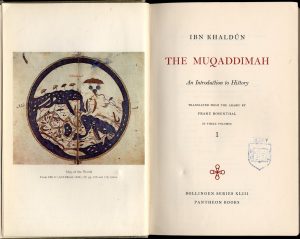 Living through one of humanity’s most turbulent centuries, Ibn Khaldūn witnessed and engaged with transformative events:
- the birth of new states and dynasties,
- The final struggles of al-Andalus,
- the Christian Reconquista,
- The Hundred Years’ War,
- The rise of the Ottoman Empire,
- the decline of Byzantium, and
- The devastation of the Black Death.
From these experiences, he developed insights into the rise and fall of civilizations, the dynamics of social cohesion (ʿasabiyya), and the moral and spiritual forces that shape human destiny.
Albert Hourani described Ibn Khaldūn’s world as “full of reminders of the fragility of human effort.” Yet, out of this fragility, Ibn Khaldūn built a vision of resilience, offering principles still relevant today.
The historian Arnold Toynbee praised him, writing: “He conceived and created a philosophy of history that was undoubtedly the greatest work ever created by a man of intelligence.”
So groundbreaking were his ideas that they continue to inspire exhibitions, scholarship, and dialogue across cultures. His masterpiece, the Muqaddimah, remains not only a mirror of his time but also a lens for understanding the enduring relations between the Muslim world, Europe, and the broader human family.
The Ibn Khaldūn Scholarship at American Islamic College honors this towering legacy—supporting students who, like him, aspire to analyze, question, and transform the world through knowledge, resilience, and vision.